Tag Archives: Energy Storage

Hydrogen‑Fuelled CCGT: A Grid Stability and Storage Game‑Changer

Hydrogen-Fueled CCGT: A Grid Stability and Storage Game-Changer

Solving Grid Challenges with Hydrogen
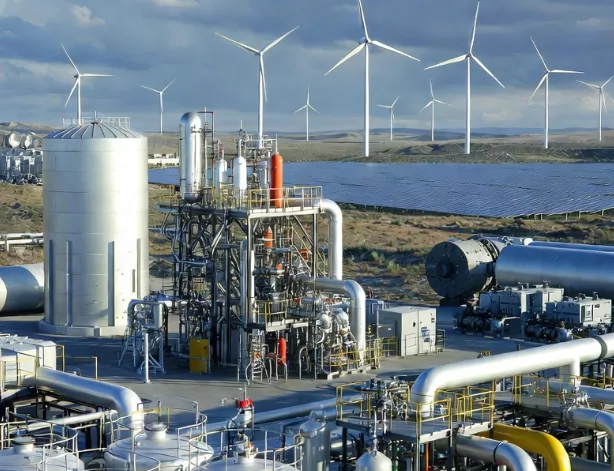
Integrating high levels of wind and solar into national grids exposes three key challenges. These include long-duration energy storage, bottlenecks in power transmission, and the decline of synchronous generation that stabilises frequency and supports inertia. Hydrogen-fired combined-cycle gas turbines (CCGTs) provide a promising solution to all three issues.


LinkedIn
Share
WhatsApp
Copy link
URL has been copied successfully!

Using Surplus Power for Hydrogen

At times of excess supply, renewable electricity can power electrolysers to produce green hydrogen. This process turns surplus electricity into a flexible energy carrier. Operators can then transport and use this hydrogen where and when needed, avoiding wasteful curtailment.

UK-based ITM Power PLC (ITM:LSE) leads in this area. The company builds modular PEM electrolysers for fast-response hydrogen production from renewable sources. Their systems already help balance grids and fuel hydrogen applications across Europe.

Hydrogen as Long-Term Storage

Hydrogen stores energy far longer than batteries. Pressurised tanks, salt caverns, and depleted gas fields can all hold hydrogen for months. These storage methods are cost-effective and ideal for managing seasonal swings in renewable output.

Hydrogen for Stable Power Generation

Hydrogen-ready CCGTs help maintain grid reliability. Grids still rely on thermal plants for inertia, frequency control, and quick ramping. Hydrogen replaces fossil gas in these turbines, decarbonising power while retaining dispatchable generation.

Turbine makers are adapting systems to burn hydrogen blends and are testing 100% hydrogen capability with low emissions. These upgrades mean utilities can continue using gas turbines in a cleaner way.

Reusing Existing Infrastructure

Many current CCGT systems already support flexible operation. Engineers can modify combustion and fuel systems to make turbines hydrogen-compatible. This approach avoids the cost and delay of building new infrastructure from scratch.

The existing gas network also offers an opportunity. High-pressure pipelines and above-ground gas towers could carry and store hydrogen with upgrades. Sites like Aldbrough in Yorkshire are preparing salt caverns to store hydrogen.

ITM Power’s decentralised electrolysers allow local hydrogen production. This supports regional energy balance and reduces reliance on new hydrogen pipelines.

Hydrogen-Fired CCGT: A Strategic Fit

Hydrogen-fired CCGTs convert renewable power into stored energy, ready for dispatch. They enhance grid stability, solve long-duration storage issues, and use existing infrastructure. With strong policy support and investment, these systems could become central to clean and reliable energy networks.

#HydrogenEnergy #GridStability #EnergyStorage #HydrogenEconomy #GreenHydrogen

12

Feb 25

EU Eyes Gas Price Cap, Betting on Renewables

The European Commission is exploring the introduction of a temporary gas price cap to address the widening gap between European…
Read More

9

Feb 25

Ditch Carbon Capture: Invest in Clean Energy & Storage

The UK government’s £21.7 billion investment in carbon capture and storage (CCS) technology is facing mounting criticism, with growing concerns…
Read More

9

Feb 25

January 2025: Record-Breaking Global Temperatures Defy Expectations

Reports indicate that this January ranks as the third-largest monthly temperature anomaly above pre-industrial levels. Notably, Europe experienced its second-hottest…
Read More

9

Feb 25

UK Drops E-Bike Tariffs for Cheaper Rides

The UK government has scrapped import tariffs on Chinese non-folding e-bikes, a decision set to make electric bikes more affordable…
Read More
1 3 4 5

Battery Storage Gains Ground in UK’s T-4 Capacity Market Auction

The latest T-4 Capacity Market Auction has awarded long-term contracts to a range of battery energy storage systems (BESS), reinforcing the critical role of storage in supporting the UK’s electricity grid. Over 1.8 GW of de-rated BESS capacity secured agreements, nearly doubling last year’s allocation of approximately 1 GW. This growth reflects the increasing importance of energy storage in balancing renewable generation and maintaining supply security.

Among the projects awarded contracts, major developments include Fidra Energy’s 1.4 GW Thorpe Marsh and 500 MW West Burton C, alongside several other grid-scale battery storage initiatives. Additionally, longer-duration storage is gaining traction, with 404 MW of 4-hour, 189 MW of 5-hour, 31 MW of 6-hour, and nearly 240 MW of 8-hour projects securing contracts. This shift highlights the need for more sustained energy storage solutions to support grid reliability.

The Capacity Market provides financial incentives for energy projects that contribute to grid stability. This year’s auction, clearing at £60/kW/year, marks a slight decrease from last year’s £65/kW/year but demonstrates continued investment in energy storage as part of the UK’s transition to low-carbon electricity generation. Meanwhile, gas-fired generation saw a marginal decline, with 27.3 GW awarded compared to 28.7 GW in the previous auction, further indicating the shift towards renewable and storage technologies.

Battery storage sites, including those within sustainable energy parks, will play a key role in securing future energy supply. The final confirmation of the auction results is expected from the Secretary of State for Energy Security and Net Zero by 24th March.

#BatteryStorage #EnergyTransition #GridStability #RenewableEnergy #SustainableFuture

More News

12

Feb 25

EU Eyes Gas Price Cap, Betting on Renewables

The European Commission is exploring the introduction of a temporary gas price cap to address the widening gap between European…
Read More

9

Feb 25

Ditch Carbon Capture: Invest in Clean Energy & Storage

The UK government’s £21.7 billion investment in carbon capture and storage (CCS) technology is facing mounting criticism, with growing concerns…
Read More

9

Feb 25

January 2025: Record-Breaking Global Temperatures Defy Expectations

Reports indicate that this January ranks as the third-largest monthly temperature anomaly above pre-industrial levels. Notably, Europe experienced its second-hottest…
Read More

9

Feb 25

UK Drops E-Bike Tariffs for Cheaper Rides

The UK government has scrapped import tariffs on Chinese non-folding e-bikes, a decision set to make electric bikes more affordable…
Read More
1 3 4 5

Heat Pump Installations Surge in the UK

The United Kingdom has witnessed a significant rise in the adoption of heat pumps, with installations reaching record levels in 2024. Data from the Heat Pump Association (HPA) indicates a 63% increase in hydronic heat pump sales, totalling 98,469 units sold during the year.

This surge is largely attributed to the government’s Boiler Upgrade Scheme (BUS), which increased grants from £5,000 to £7,500 in October 2023 to encourage the transition from traditional gas boilers to low-carbon heating solutions. The scheme’s budget was further bolstered to £295 million for the 2025/2026 financial year, reflecting a strong commitment to sustainable energy initiatives.

Several manufacturers have emerged as leaders in the UK’s heat pump market, offering a range of efficient and reliable models:

  • Worcester Bosch: A renowned UK-based manufacturer, Worcester Bosch offers air-to-water heat pumps known for their efficiency and reliability.
  • Vaillant: This German company, with a significant presence in the UK, produces the aroTHERM Plus heat pump, celebrated for its high efficiency and quiet operation.
  • Mitsubishi Electric: Known for their advanced Ecodan range, these heat pumps are praised for performance and integration with smart home systems.
  • Daikin: The Altherma series by Daikin is recognized for its adaptability to various UK home heating requirements.
  • LG: The Therma V R32 Monobloc heat pump by LG is noted for its compact design and energy efficiency.

Despite these advancements, the UK is still striving to meet its target of 600,000 heat pump installations annually by 2028. Challenges such as high electricity costs and the need for a skilled workforce persist. To address these issues, the government has launched campaigns to raise public awareness and is investing in training programs to equip professionals with the necessary skills for heat pump installation and maintenance.

Investment in energy storage is also playing a crucial role in supporting the heat pump transition. Companies such as Gresham House Energy Storage Fund (GRID:LSE) and Harmony Energy Income Trust (HEIT:LSE) are backing large-scale battery projects that enhance grid stability, ensuring reliable electricity supply for heat pump users. Additionally, Invinity Energy Systems (IES:LSE) and ITM Power (ITM:LSE) are advancing energy storage and hydrogen solutions, which could complement heat pump adoption by integrating more renewable energy sources into the grid.

The increased adoption of heat pumps is a pivotal component of the UK’s strategy to reduce carbon emissions, particularly from residential heating, which accounts for a substantial portion of the nation’s greenhouse gas emissions. As the electricity grid continues to incorporate more renewable energy sources, heat pumps offer a pathway to significantly lower household carbon footprints.

The momentum gained in 2024 signifies a positive shift towards sustainable heating solutions. Continued support and investment from both the government and industry stakeholders are essential to maintain this trajectory and achieve the UK’s ambitious net-zero goals.

#SustainableEnergy #HeatPumps #BoilerUpgradeScheme #NetZero #GreenHeating

More News

12

Feb 25

EU Eyes Gas Price Cap, Betting on Renewables

The European Commission is exploring the introduction of a temporary gas price cap to address the widening gap between European…
Read More

9

Feb 25

Ditch Carbon Capture: Invest in Clean Energy & Storage

The UK government’s £21.7 billion investment in carbon capture and storage (CCS) technology is facing mounting criticism, with growing concerns…
Read More

9

Feb 25

January 2025: Record-Breaking Global Temperatures Defy Expectations

Reports indicate that this January ranks as the third-largest monthly temperature anomaly above pre-industrial levels. Notably, Europe experienced its second-hottest…
Read More

9

Feb 25

UK Drops E-Bike Tariffs for Cheaper Rides

The UK government has scrapped import tariffs on Chinese non-folding e-bikes, a decision set to make electric bikes more affordable…
Read More
1 3 4 5