Tag Archives: Hydrogen

Hydrogen‑Fuelled CCGT: A Grid Stability and Storage Game‑Changer

Hydrogen-Fueled CCGT: A Grid Stability and Storage Game-Changer

Solving Grid Challenges with Hydrogen
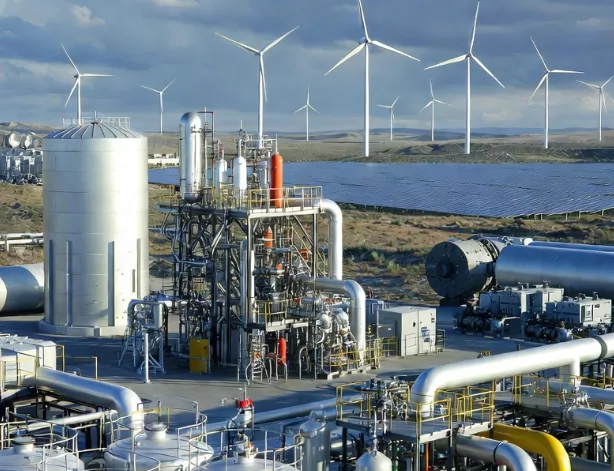
Integrating high levels of wind and solar into national grids exposes three key challenges. These include long-duration energy storage, bottlenecks in power transmission, and the decline of synchronous generation that stabilises frequency and supports inertia. Hydrogen-fired combined-cycle gas turbines (CCGTs) provide a promising solution to all three issues.


LinkedIn
Share
WhatsApp
Copy link
URL has been copied successfully!

Using Surplus Power for Hydrogen

At times of excess supply, renewable electricity can power electrolysers to produce green hydrogen. This process turns surplus electricity into a flexible energy carrier. Operators can then transport and use this hydrogen where and when needed, avoiding wasteful curtailment.

UK-based ITM Power PLC (ITM:LSE) leads in this area. The company builds modular PEM electrolysers for fast-response hydrogen production from renewable sources. Their systems already help balance grids and fuel hydrogen applications across Europe.

Hydrogen as Long-Term Storage

Hydrogen stores energy far longer than batteries. Pressurised tanks, salt caverns, and depleted gas fields can all hold hydrogen for months. These storage methods are cost-effective and ideal for managing seasonal swings in renewable output.

Hydrogen for Stable Power Generation

Hydrogen-ready CCGTs help maintain grid reliability. Grids still rely on thermal plants for inertia, frequency control, and quick ramping. Hydrogen replaces fossil gas in these turbines, decarbonising power while retaining dispatchable generation.

Turbine makers are adapting systems to burn hydrogen blends and are testing 100% hydrogen capability with low emissions. These upgrades mean utilities can continue using gas turbines in a cleaner way.

Reusing Existing Infrastructure

Many current CCGT systems already support flexible operation. Engineers can modify combustion and fuel systems to make turbines hydrogen-compatible. This approach avoids the cost and delay of building new infrastructure from scratch.

The existing gas network also offers an opportunity. High-pressure pipelines and above-ground gas towers could carry and store hydrogen with upgrades. Sites like Aldbrough in Yorkshire are preparing salt caverns to store hydrogen.

ITM Power’s decentralised electrolysers allow local hydrogen production. This supports regional energy balance and reduces reliance on new hydrogen pipelines.

Hydrogen-Fired CCGT: A Strategic Fit

Hydrogen-fired CCGTs convert renewable power into stored energy, ready for dispatch. They enhance grid stability, solve long-duration storage issues, and use existing infrastructure. With strong policy support and investment, these systems could become central to clean and reliable energy networks.

#HydrogenEnergy #GridStability #EnergyStorage #HydrogenEconomy #GreenHydrogen

15

Mar 25

Battery Storage Gains Ground in UK’s T-4 Capacity Market Auction

The latest T-4 Capacity Market Auction has awarded long-term contracts to a range of battery energy storage systems (BESS), reinforcing…
Read More

13

Mar 25

Heat Pump Installations Surge in the UK

The United Kingdom has witnessed a significant rise in the adoption of heat pumps, with installations reaching record levels in…
Read More

27

Feb 25

10% of UK Renewable Energy Wasted Due to Grid Constraints

A growing share of the UK’s wind and solar energy is being wasted due to grid limitations, underscoring the need…
Read More

27

Feb 25

Harmony Energy Income Trust Reports 57% Revenue Growth

As major energy corporations scale back renewable investments, Harmony Energy Income Trust plc (HEIT) continues to expand its battery storage…
Read More

26

Feb 25

Volklec Plans £1bn UK Gigafactory with Chinese Support

Volklec, a Coventry-based battery start-up, aims to build a £1bn gigafactory with backing from former Britishvolt investors and a partnership…
Read More

Are Hydrogen Trains The Future?

Deutsche Bahn wants diesel gone, yet 1,300 locomotives still burn it on branch lines. Now, via a new alliance with UK electrolyser firm ITM Power, the operator plans to swap that fuel for on‑site green hydrogen.

The multi‑year framework covers design, build and operation of hydrogen hubs at DB depots. Consequently, ITM will deploy modular 20 MW PEM stacks that drink surplus wind and solar power. By generating fuel where it is used, DB expects to avoid the trucking bottlenecks that derailed earlier pilots.

LinkedIn
Share
WhatsApp
Copy link
URL has been copied successfully!

Hydrogen Shortages Hamper Progress

Hydrogen traction is not brand‑new. Nevertheless, Alstom’s Coradia iLint units in Lower Saxony suffered fuel shortages and component glitches in 2024, forcing temporary returns to diesel. Therefore, DB is betting that deeper pockets and full‑scale infrastructure will fix reliability.

ITM Leads the Way in Modular Hydrogen Generation

ITM arrives with fresh momentum. Its Sheffield gigafactory has ramped to one gigawatt of annual stack capacity and could reach five by 2027. In May the company won a 300‑megawatt contract for an Asia‑Pacific power‑to‑hydrogen project, sparking an 18 percent jump in its share price. Analysts at BNEF now expect electrolyser costs to dip below €1,000 per kilowatt within two years, eroding diesel’s remaining economic edge.

Rail emits barely 0.4 percent of EU greenhouse gases, yet diesel loco exhaust remains the dominant source inside stations. Germany’s Federal Environment Agency calculates that each hydrogen‑converted regional train could avoid roughly 90 tonnes of CO₂ a year. When the gas is produced with offshore wind—think Ørsted’s North Sea farms—the lifecycle footprint approaches zero.

Policy Shifts Away From Diesel

Policy winds are also shifting. The EU’s Alternative Fuels Infrastructure Regulation, for instance, mandates clean refuelling options on every core rail corridor by 2030. As a result, DB and ITM hope to open their first 100‑tonne‑per‑day hub in Schleswig‑Holstein by 2027, serving a busy non‑electrified freight line into Hamburg.

The Hydrogen Payback

Environmental gains look material. According to Germany’s Federal Environment Agency, each converted regional train could cut roughly 90 tonnes of CO₂ per year. Meanwhile, pairing electrolysers with Ørsted’s North Sea wind farms drives the lifecycle footprint close to zero. Investors, therefore, have noticed: ITM shares jumped 18 percent in May after a 300 MW deal in Asia‑Pacific. Furthermore, analysts at BNEF forecast electrolyser prices falling below €1,000 kW by 2027, finally eroding diesel’s remaining cost edge.

For rail decarbonisation, momentum now rests on execution—but the blueprint is clear.

HydrogenEnergy #SustainableTransport #CleanEnergy #GreenRail #HydrogenTrains

More News

15

Mar 25

Battery Storage Gains Ground in UK’s T-4 Capacity Market Auction

The latest T-4 Capacity Market Auction has awarded long-term contracts to a range of battery energy storage systems (BESS), reinforcing…
Read More

13

Mar 25

Heat Pump Installations Surge in the UK

The United Kingdom has witnessed a significant rise in the adoption of heat pumps, with installations reaching record levels in…
Read More

27

Feb 25

10% of UK Renewable Energy Wasted Due to Grid Constraints

A growing share of the UK’s wind and solar energy is being wasted due to grid limitations, underscoring the need…
Read More

27

Feb 25

Harmony Energy Income Trust Reports 57% Revenue Growth

As major energy corporations scale back renewable investments, Harmony Energy Income Trust plc (HEIT) continues to expand its battery storage…
Read More

26

Feb 25

Volklec Plans £1bn UK Gigafactory with Chinese Support

Volklec, a Coventry-based battery start-up, aims to build a £1bn gigafactory with backing from former Britishvolt investors and a partnership…
Read More